[A series of posts which critique common misconceptions about the rural poor and working poor, held by media, politicians, and ordinary citizens.]
We all know that the hardest part about living up here isn’t the winter. It’s about making a living and paying the bills, especially in the winter months. An astounding 800,000 people in Michigan do not earn enough to pay for their utility bills, and many of them are in the rural north. When residents in Cheboygan county dial 2-1-1, looking to connect with social service organizations for assistance, the overwhelming majority — 37% — are looking for help with utility assistance. Duh! It’s cold up here.
But when it comes to utility assistance, there’s one group of residents that is especially left out in the cold by current policies, and you won’t find them in big cities. I’m talking about rural residents who rely on propane for their heat.
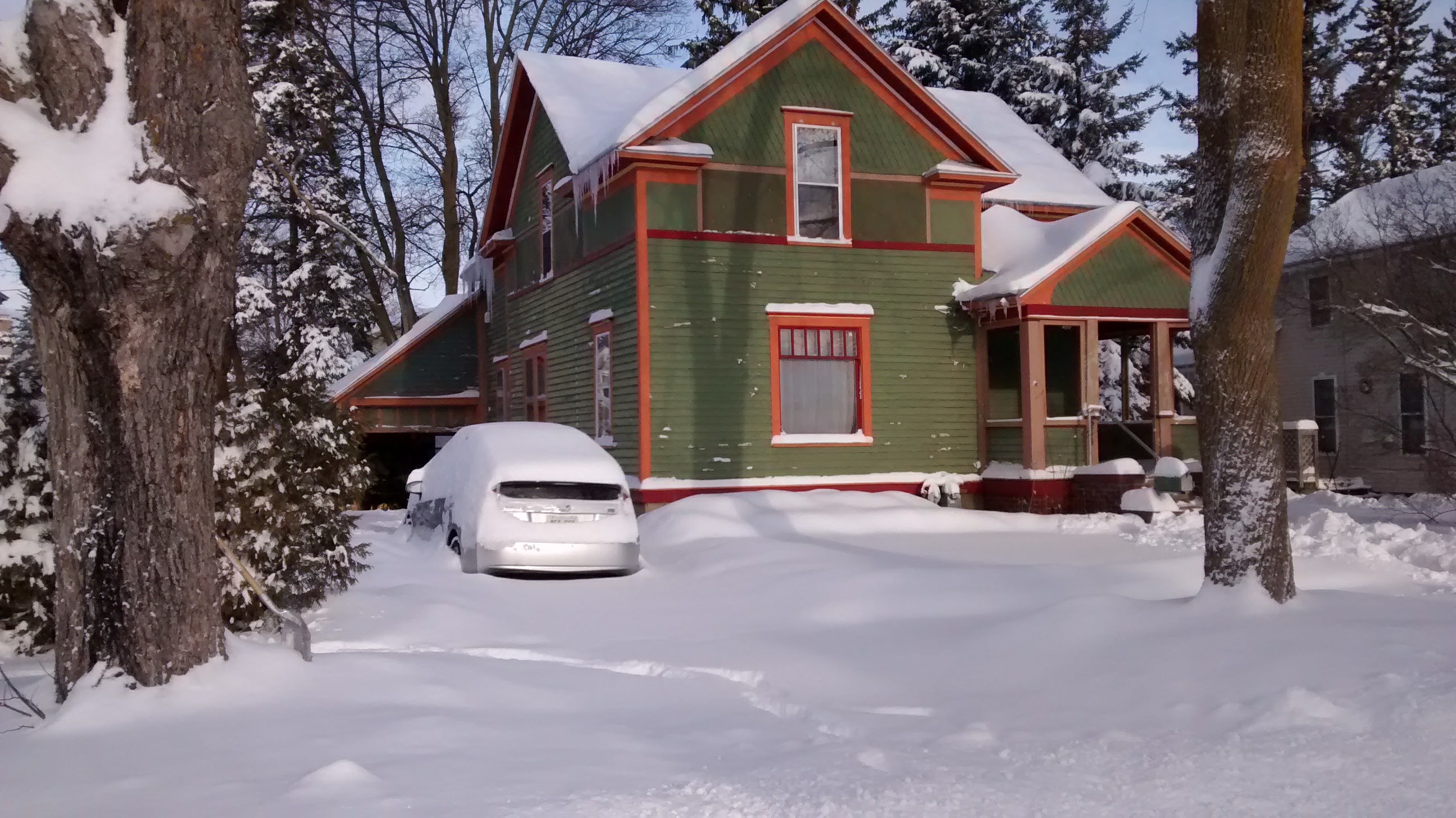
Honestly, until I started investigating problems at the Michigan DHHS this winter, I didn’t know about the problems that propane users can encounter. When I grew up in Cross Village, we heated our home with wood cut off our property; and when we moved to Cheboygan we heated with natural gas. My only experience with propane was with the gas grill in summer, and the small tank we kept to heat our barn’s workshop in the Christmas season.
Now I count myself doubly lucky: I have a full-time job in the winter, and I heat with natural gas. Anyone who heats with electric or natural gas has an advantage: their utilities are regulated and they are protected from shut off in the case of emergency during the heating season (November 1 – March 31). It took the tragic death of a Bay City senior citizen, Marvin Schur, to create those protections for electric and natural gas users.
Many households, however — especially in Northern Michigan — rely on “deliverable” fuel sources like wood, propane and fuel oil. These sources differ in kind from electric and natural gas, which are connected to a grid and offer continuous service. They require a lump sum payment and delivery to the home, which can make budgeting for heat more difficult than with natural gas or electric. In Michigan 3% of homes heat with wood and 1% heat with fuel oil. Propane users in Michigan, at 9% of households, are a sizable minority. No other state has the level of household propane use that we do. And yet our state does not have adequate safeguards for these rural households.
Propane remains the one heating source that is unregulated, and when your tank starts to run low you’ll find the state safeguards are woefully inadequate. So guess what, propane users: you are shit out of luck. There are no shut-off protections in the case of propane, a situation that some people refer to as the “propane loophole”.
Consider the story — reported by Michigan Radio and the Traverse City Record-Eagle — of what one Alanson resident went through this winter, when she watched her tank get low. Lara and her husband work jobs that are affected by seasonal employment patterns. When health problems also caused her husband to lose work as winter approached, they turned to the DHHS to get help with paying utility bills. But they encountered a department that had lost its ability to help people efficiently.
First, they endured excessive phone wait times (1-3 hours) in order to speak with a human services worker. Then they ran up against a system that was backlogged with cases, and taking much more than the 10 days mandated by state guidelines to respond to heating assistance requests. Because service organizations such as United Way and the Salvation Army are now required to have a DHHS eligibility letter before offering assistance, the DHHS backlog has impeded other avenues of support. But being approved for assistance is only part of the story. When Lara finally did receive her DHHS approval in the mail, it mandated a co-pay that was in excess of their family’s current savings. Instead of paying the DHHS co-pay, Lara opted to get a partial fill on her tank, thanks to the help of friends.
Here’s one problem: in order to qualify for DHHS assistance, a family’s tank must be at 25% or less than capacity. It’s an odd rule, since tanks can vary widely in size, from 120 to 1000 gallons. If there’s a cold snap, and you’ve got a smaller tank with less than 25% filled, you’re soon going to be reduced to fumes. A backlogged DHHS, where response times go well beyond 10 days, increases that threat.
Imagine this: as the temps start to drop, you watch the gauge on your tank drop as well. And you then have to make a calculation: do you wait for DHHS to respond, not knowing whether you can expect a response in 10 days, and whether you can afford a co-pay? Or do you scrounge the money – by selling possessions, begging friends and family – to get a minimum fill? In one case reported to me, a family was so low on propane that they made the choice to make a partial fill while they waited for a DHHS response. When an interview with the family was finally scheduled with the caseworker, their tank was now above 25% — because friends had helped them make a fill — and their case was automatically denied by the DHHS.
There’s also this problem: since propane is unregulated, the price per gallon can fluctuate wildly. On average it is twice as expensive to heat a home with propane as it is with natural gas. And what do you think happens when private propane companies are allowed to set their own prices? Price gouging. During the winter of 2016-2017, for example, the price of propane per gallon rose 50.3%, more than natural gas (+44.5%), fuel oil (+19.5%), or electric (-28.8%). It’s an ongoing problem that prompted the last Attorney General (Bill Schuette) to bring formal charges against AmeriGas. Price fluctuations play havoc with a family’s budget, especially if they have smaller winter paychecks and are waiting for seasonal employment to pick up.
There are commonsense solutions that would fix the propane loophole, in which households that rely on propane as their primary heat source risk the loss of heat, if they are unable to pay for their fuel tank to be filled. The state could begin regulating propane, as it does with other utilities. And it could find ways to ensure that households have the security of an uninterrupted supply of propane during the heating months. Will we be able to convince our legislators to make these changes, now that the temperatures are rising? Or it will it take the death of someone next winter, to force our legislators to pay attention? Let’s hope history doesn’t repeat itself: are we smart enough to learn from the case of Marvin Schur?
 Micropolitan
One thought on “They Don’t Know (Part 6)”